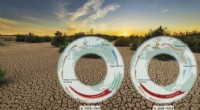
1. Protection from harmful radiation:
- The atmosphere shields the Earth from harmful solar radiation, such as ultraviolet (UV) rays. These rays can cause damage to living organisms, including skin cancer, DNA damage, and even death.
- The ozone layer, located in the stratosphere, is particularly important in absorbing UV radiation.
2. Regulation of temperature:
- The atmosphere helps to regulate Earth's temperature through various processes.
- Greenhouse gases in the atmosphere, such as carbon dioxide and methane, trap heat radiated from the Earth's surface, contributing to a relatively stable and habitable temperature range.
- Clouds and atmospheric particles can reflect solar radiation back into space, contributing to cooling effects.
3. Provision of essential gases:
- The atmosphere contains essential gases that living organisms need to survive.
- Oxygen (O2) is crucial for respiration in animals, plants, and many microorganisms.
- Carbon dioxide (CO2) is a vital source of carbon for plants, forming the basis of the food chain.
4. Distribution of heat and moisture:
- The atmosphere plays a role in redistributing heat and moisture around the globe through various processes.
- Wind patterns transport warm and cold air masses, influencing regional climates.
- Atmospheric water vapor leads to the formation of clouds, precipitation, and the hydrological cycle.
5. Protection from meteors and space debris:
- The Earth's atmosphere provides a protective barrier against meteors and other space debris.
- The smaller size of the atmosphere compared to the Earth's size means that the chances of a damaging impact are relatively low.
6. Scattering and absorption of light:
- Atmospheric gases and particles cause the scattering and absorption of light.
- This scattering produces blue skies during the day and colorful sunrises and sunsets.
- It also enables phenomena such as rainbows and auroras.
7. Facilitation of weather phenomena:
- The atmosphere is responsible for various weather phenomena that affect life on Earth.
- Wind, rain, snow, storms, and seasons are all influenced by atmospheric processes.
8. Support for ecosystems:
- Atmosphere-land-water interactions create diverse ecosystems and habitats.
- The movement of air masses influences plant and animal distribution patterns.
In conclusion, the atmosphere plays a multifaceted and essential role in sustaining and protecting life on Earth's surface. From shielding against harmful radiation and regulating temperature to providing essential gases and supporting diverse ecosystems, the atmosphere is a critical component that enables life to thrive on our planet.