Deep Roots: Trees have extensive root systems that anchor them firmly in the ground, providing stability against strong winds. The roots spread wide and penetrate deep into the soil, creating a strong hold that resists uprooting.
Flexible Trunks and Branches: The trunks and branches of trees are flexible and can bend without breaking under the pressure of strong winds. This flexibility allows trees to sway and absorb the force of the wind without snapping.
Strong Wood: The wood of trees is strong and resilient, providing internal support against wind forces. The cellular structure of the wood, composed of cellulose and lignin, gives trees their strength and durability.
Buttress Roots: Some tree species develop specialized buttress roots that extend above the ground and provide additional support. These roots act like pillars, reinforcing the tree's structure and preventing it from toppling.
Wind-Resistant Bark: The bark of trees serves as a protective layer that helps them withstand wind damage. The bark may be thick and tough, or it may have specialized structures, such as ridges or scales, that help deflect wind and reduce drag.
Leaf Arrangement: The arrangement of leaves on a tree's branches can also influence its wind resistance. Trees with smaller leaves and a streamlined shape are less likely to catch the wind and experience damage compared to trees with larger, more intricate leaves.
Response to Wind: Trees can sense the movement of wind and respond by adjusting their growth patterns. They may produce thicker bark, develop stronger root systems, or increase their flexibility over time, becoming better equipped to endure future storms.
Environmental Adaptation: Trees that are native to regions with frequent storms have often adapted to these conditions over time. They may have evolved specific traits, such as increased flexibility or wind-resistant bark, that enable them to survive in their environments.
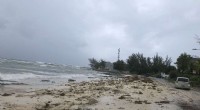
Despite these adaptations, trees may still be vulnerable to extreme weather events, such as hurricanes or tornadoes. These storms can cause significant damage, leading to uprooted trees, broken branches, and defoliation. However, the natural mechanisms that trees possess help them withstand many types of storms and continue to thrive in various environments.