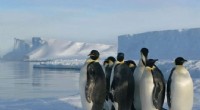
- Rising sea levels: As sea levels have risen due to global warming, Adelie penguins have had to adapt to changing nesting sites. Colonies that were previously on low-lying beaches are now at risk of flooding, which has led to increased competition for nesting space in suitable areas. Some penguins have moved to higher ground, while others have sought out new nesting sites, such as rocky areas or ice cliffs.
- Changes in sea ice: Adélie penguins rely on sea ice for breeding, feeding, and traveling. Changes in sea ice conditions, such as later freezing and earlier melting, have led to a reduction in nesting sites and foraging opportunities. This has made it more difficult for penguins to successfully raise their young, and has forced them to travel longer distances for food.
- Overfishing: The overfishing of Antarctic krill, a key food source for Adélie penguins, has put additional pressure on the species. With less krill available, penguins have had to either find other sources of food or compete more intensely for the remaining krill, leading to declines in population size.
These are just a few examples of how natural selection has acted on the Adélie penguin over the past quarter century. As the effects of climate change continue, it is likely that the Adélie penguin and other Antarctic species will face even greater challenges in the future.