The concept of cold air rising is often misunderstood because of the way we experience weather. When it is cold outside, the air near the ground can feel warmer than the air higher up. This is because the ground absorbs heat from the sun during the day and releases it at night, warming the air near the surface. However, the overall temperature of the air decreases as you move higher in the atmosphere, even if it feels warmer at ground level.
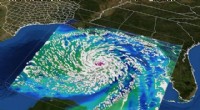
The rising of warm air and sinking of cold air is what creates winds. When the difference in temperature between two areas of air is great, the wind speed will be high. This is why we experience strong winds during storms, when the temperature difference between the warm air near the ground and the cold air at higher altitudes is large.
Convection is also responsible for the formation of clouds. When warm, moist air rises, it cools and condenses into water droplets or ice crystals, which form clouds. The type of cloud that forms depends on the temperature and moisture content of the air.
The circulation of air in the atmosphere is essential for the Earth's climate. It helps to distribute heat around the globe, and it also transports moisture from the oceans to the land. Without convection, the Earth's climate would be much more extreme, with very hot areas near the equator and very cold areas near the poles.