A water table map visualizes the surface of an unconfined aquifer using elevation contours. The U.S. Environmental Protection Agency recommends using at least three groundwater‑level measurements from nearby wells or surface water sources. Converting those measurements to elevations provides the basis for contour lines of equal height. The resulting map shows the planar surface of groundwater within the triangular area defined by the three points.
Write each water‑elevation value beside its corresponding location on the scaled map (usually at a well).
Draw a straight line connecting the highest and lowest elevation points.
Choose convenient, evenly spaced contour values between the high and low points—for example, every 0.5 ft. This interval becomes the contour step for the entire map.
Interpolate where the chosen contours cross the first line. Mark tick marks for each contour value along the line so that they are proportionally spaced relative to the two endpoints. For instance, the 27.5 ft contour would be closer to the 27.7 ft endpoint than to the 25.8 ft endpoint.
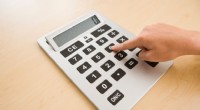
Place the remaining ticks proportionally—e.g., at 27.0, 26.5, and 26.0 ft. Use a calculator if you need precise placement.
Draw a second line connecting the middle‑elevation point to the lowest point. Add ticks along this line at the same contour interval, spaced proportionally between its endpoints. Connecting equal‑value ticks across lines creates the first set of elevation contours.
Select a tick on the first line and draw a line to the tick of the same value on the second line. This contour will stay within the triangle formed by the three initial lines.
Continue drawing parallel contour lines through matching ticks. None of the contour lines will cross each other; each line represents a locus of equal elevation.
Because many assumptions influence map accuracy, consult a professional hydrogeologist or geologist before making planning, water‑use, or cleanup decisions. The greater the distance between elevation points, the higher the uncertainty in both the map and any decisions based on it.