By Casey Woods
Updated Aug 30, 2022
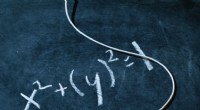
In mathematics, we can graph circles, ellipses, lines, and parabolas—each described by an equation. Yet, not every equation qualifies as a function. A function requires a unique output for every input. For example, a circle’s equation can yield two distinct y‑values for a single x, so it fails the function test and cannot be expressed in standard function form.
Use the vertical line test. Slide a vertical line across the graph; if it intersects the curve at most once, the relation satisfies the one‑to‑one output rule and is a function.
Isolate y. For example, start with y − 6 = 2x, add 6 to both sides, and obtain y = 2x + 6.
Choose a function name. The convention is a single letter (f, g, h, etc.). Identify the independent variable; in y = 2x + 6 the variable is x, so the function is written f(x).
Write the function in standard notation: f(x) = 2x + 6.
To define a function, write the name followed by the independent variable in parentheses—e.g., f(x), g(x), or h(t) for time‑dependent functions. Functions need not be linear; g(x) = −x² − 3x + 5 is a nonlinear function because of the x² term, but it still assigns a single output to each x. To evaluate, replace the variable with the desired input: f(3) = 12, f(0) = 6, f(−1) = 4.
Do not confuse function names with multiplication. Function f(x) is not the variable f times the variable x; it is a function named f that depends on x.