By Kevin Beck – Updated Aug 30, 2022
raspirator/iStock/GettyImages
When we look at the night sky without preconceived notions, it’s easy to make wrong assumptions. A child at dawn sees the sun rise on one horizon, climb, and set on the opposite side. The moon and stars perform a similar dance. The scene appears static, with everything revolving around a still Earth. This was the common view for centuries.
The term “solar” refers to the Sun. The Sun, a star only 93 million miles from Earth, is by far the most massive object in the system and the only one of its kind. Its gravity keeps every other object bound to it, either directly or indirectly.
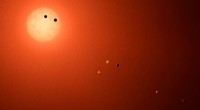
Planets are the second class of solar‑system bodies. Eight planets orbit the Sun, ranging from Mercury, the smallest, to Jupiter, the largest. Pluto was reclassified as a dwarf planet in the early 2000s, reflecting its smaller size and more distant orbit.
Moons, or natural satellites, orbit planets. Earth’s single moon is roughly one‑quarter its diameter; the gas giants host dozens of moons each. Because planets orbit the Sun, the Sun remains the true center of every moon’s journey.
Small bodies include comets, asteroids, the Kuiper Belt, and the Oort Cloud. They are remnants of the early Solar System and populate the outer reaches beyond Neptune.
Geocentrism places Earth at the center of the universe, a view championed by Aristotle and Ptolemy and upheld by the early Church. Heliocentrism, the modern consensus, centers the Sun. The shift began in the 16th century when Nicolaus Copernicus challenged the geocentric model, noting that the planets’ retrograde motion could be explained by Earth’s own orbit.
Greek mathematicians had already laid the groundwork for orbital mechanics. Aristarchus (c. 200 B.C.) proposed a rotating Earth, but the lack of a gravity theory led to its dismissal. In the 10th and 11th centuries, Al‑Haitham from Iraq accurately estimated the extent of Earth’s atmosphere and advanced optics, yet his work remains under‑recognized today.
Key to heliocentrism was recognizing that celestial bodies travel in elliptical orbits, not perfect circles, and that the cosmos is not uniform in composition. These insights, coupled with observational evidence, forced a reevaluation of long‑held beliefs.
The heliocentric model provides a testable framework: the Sun at the center with planets orbiting it. Tycho Brahe refined the model by placing the Sun in orbit around Earth, which preserved a geocentric stance while acknowledging planetary motions. Galileo’s telescope observations—moons around Jupiter, phases of Venus, lunar mountains—confirmed the Sun‑centered view and undermined geocentrism.
Accepting a Sun‑centered system is essential for modern spaceflight, accurate planetary navigation, and understanding distant galaxies. Without heliocentrism, our ability to predict celestial motions and explore the cosmos would be futile.