By Audrey Farley | Updated Aug 30, 2022
In geometry, a trapezoid (or trapezium in British English) is a quadrilateral with exactly one pair of parallel sides, called the bases. The other two sides, called the legs, are generally non‑parallel. As with any quadrilateral, the sum of the interior angles is 360°.
First determine whether the trapezoid is isosceles. An isosceles trapezoid has a line of symmetry that bisects it into two congruent right triangles. In such a figure, the legs are equal in length, the diagonals are equal, and each pair of base‑adjacent angles is congruent. These properties simplify the calculation of unknown angles.
List every value that the problem supplies—whether an angle, a base length, or the length of the mid‑segment (the segment that connects the midpoints of the legs and is parallel to the bases). From these, you can compute missing side lengths or other angles that will later be used in your calculations.
Key results for trapezoids include:
A = \tfrac{1}{2}(b_1 + b_2)h, where b_1 and b_2 are the bases and h is the height.A = m \times h, where m is the mid‑segment length.Use these relationships to solve for missing side lengths or heights that will lead to the desired angle.
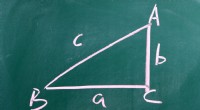
Drop a perpendicular from a vertex on one base to the opposite base; the resulting height forms a right triangle with part of the leg or base. With the height and the known side length, you can compute the angle using basic trigonometric ratios (e.g., \tan\theta = \frac{\text{opposite}}{\text{adjacent}}). This approach works especially well when the trapezoid is not isosceles.
Following these steps ensures a systematic, error‑free determination of any interior angle in a trapezoid.