By Contributor
Updated Aug 30, 2022
Converting fractions to decimals is a routine mathematical task that streamlines many calculations. Whether you’re a student revisiting basic arithmetic or an adult refreshing a skill, the process is straightforward once you understand the components of a fraction.
Every fraction has two numbers: the numerator (top number) and the denominator (bottom number). For instance, in 3/4, 3 is the numerator and 4 is the denominator. The denominator tells you into how many equal parts the whole is divided.
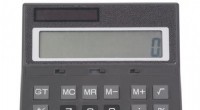
To convert a fraction to a decimal, divide the numerator by the denominator. Using the example above: 3 ÷ 4 = 0.75, so 3/4 equals .75.
Try another example: 1/2. Divide 1 by 2 to get 0.50. Even fractions that do not resolve into a terminating decimal follow the same rule. For example, 2 ÷ 3 = 0.666…; the repeating 6 can be rounded to 0.667 for practical use.
By mastering these three simple steps, you can reliably convert any fraction into its decimal counterpart.