Ablestock.com/AbleStock.com/Getty Images
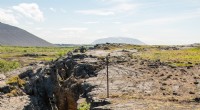
The Earth's crust is the planet’s outermost solid layer. It forms the ground we walk on and varies in thickness from roughly 3 miles (5 km) in thin oceanic regions to about 40 miles (65 km) beneath continental interiors. Below the crust lies the upper mantle.
The lithosphere consists of the crust plus the uppermost portion of the mantle. Its thickness ranges from 60 to 180 miles (95–290 km). This rigid layer hosts the tectonic plates that drive plate tectonics. Beneath it lies the asthenosphere—a partially molten, ductile layer that allows the lithosphere to move.
A cross‑section of the Earth reveals a concentric arrangement: a solid inner core, a liquid outer core, multiple mantle layers, and a thin outer crust. The lithosphere occupies the crust and the upper solid mantle; the asthenosphere represents the upper mantle’s molten zone.
The asthenosphere’s malleability permits the overlying lithosphere to glide, enabling the motion of tectonic plates. This movement shapes mountains, trenches, earthquakes, and volcanoes. Heat from the mantle melts surrounding rock, softening the asthenosphere and facilitating plate drift.
Plate interactions modify the planet’s surface in distinct ways. For example, when two oceanic plates diverge, magma rises, cools, and forms an underwater ridge. Tectonic boundaries are categorized as: