By Adrianne Jerrett
Updated Aug 30, 2022
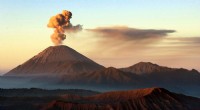
Volcanoes are broadly classified into two primary types: stratovolcanoes—also known as composite volcanoes—build steep, conical shapes from viscous magma that erupts explosively, and shield volcanoes, which display gentle slopes because their magma is more fluid and flows outward.
Volcanic deformation—swelling, cracking, or sinking of the ground—often precedes an eruption. Even a subtle bulge of only a few inches can signal magma rising beneath the surface. Associated changes in soil chemistry, temperature, and steam emissions are additional telltale indicators.
New fumaroles or sudden increases in steam vent activity, as well as shifts in their chemical composition, can also hint at an upcoming eruption.
An uptick in the frequency and intensity of small seismic events—known as volcanic earthquakes—typically foreshadows a volcanic eruption. These low‑frequency tremors arise when magma, gas, or fluids fracture the surrounding rock. Seismologists monitor these swarms with seismographs; while most swarms do not trigger eruptions, their presence warrants heightened vigilance.
Occasionally, a tectonic quake along a nearby fault can trigger an eruption if the volcanic system already contains pressurized magma.
Volcanologists employ a suite of instruments to track ground movement and gas output. Tiltmeters detect minute changes in surface tilt, strainmeters measure deformation, and creepmeters monitor fault creep. Satellite imagery complements these ground‑based observations, allowing scientists to assess eruption likelihood.
Large eruptions can project ash and tephra more than 60 miles from the vent, and supervolcano events like Yellowstone can alter global climate. The most powerful eruption in the past 5,000 years—Taupo in New Zealand around 186 AD—blanketed the country with 0.39 inches of ash and is believed to have caused the red sunsets reported by Romans and Chinese.
Volcanic hazards include explosive eruptions, toxic gases (CO₂, SO₂, H₂S, and hydrogen halides), lava flows, lahars, tephra fallout, tsunamis, landslides, debris avalanches, and jökulhlaups—rapid glacial lake outburst floods. Hydrogen halides are highly water‑soluble, so they can infuse into water droplets, produce acid rain, or attach to ash particles, contaminating waterways and drinking water.