By Doug Donald | Updated Aug 30, 2022
Volcanoes are the Earth’s most dramatic expressions of geothermal energy, shaping landscapes and influencing climate. A volcano is essentially a vent in the planet’s crust that releases magma, ash, and gases. While the underlying forces—heat and pressure—are universal, volcanoes fall into distinct categories, each with characteristic behaviors and hazards. The U.S. Geological Survey identifies four primary types, though some experts argue additional forms should be recognized.
Shield volcanoes boast broad, gently sloping flanks reminiscent of a warrior’s shield. Constructed almost entirely from successive layers of basaltic lava, they grow gradually over time. Their central vent—and sometimes additional flank vents—emits low‑viscosity basalt that travels far before solidifying, resulting in predominantly effusive eruptions that rarely pose significant danger to nearby populations. Notable examples include the Hawaiian chain; Mauna Loa, the world’s largest volcano, covers roughly half of the island of Hawaii.
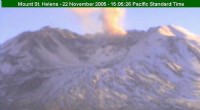
Composite volcanoes, also known as stratovolcanoes, feature steep, symmetrical profiles composed of alternating layers of ash, cinders, lava blocks, and fresh lava flows. These volcanoes erupt from a central summit vent or flank vents, producing explosive displays that can send ash plumes, pyroclastic flows, and lahars miles into the atmosphere. They typically generate high‑viscosity rhyolitic or andesitic lava that travels only short distances down the volcano’s slopes. Famous examples include Mt. Fuji, Mt. Rainier, and Mt. Etna.
Lava domes form when high‑viscosity magma—often rhyolitic—stagnates near the vent, cooling and solidifying before it can travel far. Pressure from the underlying magma forces the solidified material to bulge outward, creating a dome that can appear as a rugged, craggy mound or a steep, narrow “coulee.” Lava domes may develop in volcanic craters or on the flanks of larger volcanoes, and their growth can trigger hazardous pyroclastic flows.
These small, conical volcanoes rarely exceed 1,000 feet in height. Also called scoria cones, they form from ejected volcanic fragments—ash, lava, and tephra—that fall back around a single vent, hardening into a steep, circular shape. Typically short‑lived, cinder cones are common on the flanks of larger volcanoes and are easily identifiable by their prominent summit crater.
Some volcanic phenomena do not fit neatly into the four main categories. Rhyolitic caldera complexes—such as the Yellowstone Caldera—represent ancient, explosive eruptions that collapsed the surface into a vast crater. Although Yellowstone last erupted 640,000 years ago, recent uplift data indicate rising pressure beneath the caldera. Mid‑ocean ridges, meanwhile, are underwater volcanic chains that form along divergent plate boundaries, where basaltic magma rises to fill the space between separating plates.