Bettmann/Getty Images
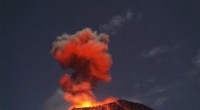
On March 27, 1980, Mount St. Helens began its violent awakening. The peak’s most powerful blast occurred on May 18, with a Volcanic Explosivity Index (VEI) of 5.
A 23‑square‑mile landslide ripped from the volcano’s north flank when a magnitude‑5.1 earthquake triggered a rapid collapse. The sudden depressurization of the magma chamber unleashed explosive steam, ash, rocks, and volcanic gases across a 230‑square‑mile zone.
Approximately 520 million tons of ash were lofted 15 miles into the atmosphere. Prevailing winds carried the ash plume eastward, shrouding the sky in darkness as far as 250 miles and circling the globe in just 15 days.
Pyroclastic flows raced at 50–80 mph, extending up to 5 miles north of the crater, while lahars—fast‑moving mudflows—streamed through river valleys.
The eruption obliterated 15 miles of railway track and over 185 miles of roadway, destroyed 27 bridges, and toppled more than 200 homes. Timber losses exceeded 4 billion board feet.
Fifty‑seven people lost their lives, predominantly due to ash‑related asphyxiation.
Mount St. Helens, a composite volcano within the Pacific Ring of Fire, is one of the world’s 1,500 active volcanoes and accounts for about 75 % of global volcanic activity. While the 1980 event remains the most catastrophic in U.S. history, subsequent eruptions have been less explosive.
Since 1980, the volcano has not reached a VEI of 5 again. The most significant activity since then occurred between 1990 and 1991, peaking at a VEI of 3.
The U.S. Geological Survey’s Cascades Volcano Observatory rates Mount St. Helens as a high‑threat volcano. Volcanologists anticipate another explosive episode within the next few decades and are monitoring the site closely for precursors that could signal an impending disaster.
Researchers have successfully forecasted smaller eruptions up to three weeks in advance, though they cannot yet predict the size or exact nature of future activity. The deep crater left by the 1980 eruption and the absence of a similar landslide mechanism reduce the likelihood of a repeat of the original lateral blast.
Kenneth Sponsler/Shutterstock