menur/Shutterstock
An earthquake is an event that shakes the Earth's surface, occasionally cracking the ground and damaging human‑made structures such as bridges and buildings. Its intensity is measured on the Richter scale, ranging from 1 to 10. Events with a magnitude of 6.0 or higher are classified as major and can cause significant loss of life and property.
While the majority of seismic events result from the gradual release of stress along tectonic plate boundaries, other mechanisms also generate earthquakes. Human‑induced events exist, but natural earthquakes tend to be far more powerful. The most powerful earthquake ever recorded—a 9.5‑magnitude event in Chile in 1960—was entirely natural.
Cavan Images / Peter Essick/Getty Images
Tectonic plates are in constant motion. When the edges of these plates—fault lines—stick together, the built‑up stress can be released suddenly, generating seismic waves. This mechanism powers most earthquakes worldwide. A prime example is the San Andreas Fault, an 800‑mile long fracture that moves roughly 2 inches per year, producing about 10,000 earthquakes annually in southern California.
Because plate motion is ongoing, earthquakes happen all the time. Most are minor and go unnoticed; only those above magnitude 3 are felt by people. Larger plate‑boundary earthquakes are catastrophic, causing extensive damage and loss of life. The 1960 Chilean earthquake, for instance, not only reached a magnitude of 9.5 but also triggered a tsunami that reached the Philippines.
Volcanoes and their eruptions can elevate seismicity in two ways. First, the violent movement of magma and lava can generate long‑period earthquakes, whose signatures help forecasters predict eruptions such as the 1980 Mount St. Helens blast.
Volcanoes erupt on a global scale roughly 60 times each year, and each eruption is scored on the Volcanic Explosivity Index (VEI), which ranges from 0 to 8. The higher the VEI, the more explosive the eruption. While volcanic earthquakes are typically smaller than plate‑boundary quakes, the largest recorded volcanic‑induced event was a 5.5‑magnitude tremor beneath Mount St. Helens in 1981. These events usually occur within 7 miles of the surface and are often undetectable by the general public.
Landslides often follow earthquakes, triggered by sudden ground instability. They can involve earth, rock, snow, or debris sliding down steep slopes. When a landslide itself causes seismic activity, the event typically measures magnitude 4.0 or higher.
In some rare cases, a landslide can initiate an earthquake. The rapid redistribution of mass creates stress concentrations in the crust, and if the slide occurs near an already stressed fault, it can amplify the seismic risk. Such interactions are part of why scientists monitor landslides in seismically active regions.
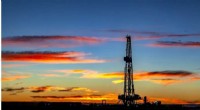
While most seismicity is natural, human activities can also trigger earthquakes. Hydraulic fracturing—commonly known as “fracking”—can induce tremors, but it is primarily the injection of waste fluids into deep wells that raises pore pressure along fault lines, leading to seismic events.
In the central United States, the U.S. Geological Survey has documented a spike in fracking‑related earthquakes, with Oklahoma experiencing the highest incidence. The most powerful fracking‑induced quake recorded was a magnitude 4.0 event in Texas in 2018. Importantly, wastewater‑injection wells generate more earthquakes than the extraction itself.
Explosions in underground mines are a notable human‑induced cause of earthquakes, constituting roughly 25 % of all anthropogenic seismicity. China leads in mine‑induced tremors, followed by the United States. The process of blasting or extracting large volumes of rock creates stress within the surrounding bedrock, which can later release as seismic energy.
Mine‑induced earthquakes typically range from magnitude 3 to 4. The most powerful recorded event—a 6.1‑magnitude quake—was triggered by underground coal mining in Russia. Similar, smaller tremors are frequently observed near active mining sites worldwide.
During the mid‑20th century, underground nuclear detonations were conducted worldwide, some of which produced seismic waves. While not all nuclear explosions generate earthquakes, those that do are generally smaller than the detonations themselves. Underground blasts can stress nearby tectonic plates, potentially triggering secondary quakes even hundreds of miles away.
At the Nevada Test Site, 928 nuclear tests were carried out between 1951 and 1992. In the 1960s, increased seismicity was observed in northern California, but subsequent research could not definitively link those tremors to the nuclear tests. The phenomenon remains a topic of scientific inquiry.