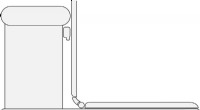
Sill:
* Orientation: A sill is concordant with the surrounding rock layers. This means it intrudes horizontally between layers of pre-existing rock.
* Shape: Sills typically have a tabular shape and can be quite extensive horizontally.
* Formation: Magma intrudes along planes of weakness within the layers, often exploiting bedding planes.
* Example: A sill might form between layers of sandstone or limestone, creating a flat, horizontal intrusion.
Dyke:
* Orientation: A dyke is discordant with the surrounding rock layers. This means it intrudes vertically or at an angle to the layering of the surrounding rock.
* Shape: Dykes are also typically tabular in shape but tend to be more vertical.
* Formation: Magma intrudes into fractures or cracks within the pre-existing rock, often created by tectonic stress.
* Example: A dyke might cut across layers of granite, creating a vertical wall of igneous rock.
Here's a simple analogy:
Imagine a layer cake.
* A sill is like spreading icing between the layers of cake, staying parallel to the cake layers.
* A dyke is like cutting a slice of cake vertically from top to bottom.
Key Differences:
| Feature | Sill | Dyke |
|---|---|---|
| Orientation | Concordant (horizontal) | Discordant (vertical or angled) |
| Shape | Tabular, horizontal | Tabular, vertical or angled |
| Intrusion | Along bedding planes | Into fractures or cracks |
Understanding the difference between sills and dykes is crucial for geologists as it helps them interpret the geological history of a region and understand the processes that have shaped the landscape.