Subduction:
* The Pacific Plate is slowly diving (subducting) beneath the North American Plate along the coast of California.
* This creates a subduction zone, a region where one tectonic plate slides beneath another.
* The descending oceanic plate carries water and sediments with it, which lower the melting point of the surrounding mantle rock.
* This melting creates magma, which is less dense than the surrounding rock and rises towards the surface.
Volcanic Activity:
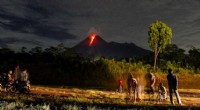
* When the magma reaches the surface, it erupts, forming volcanoes.
* Lassen Peak and Mount Shasta are located in the Cascade Range, a chain of volcanoes formed by this subduction process.
Specific Formation:
* Lassen Peak: Lassen Peak is a relatively young volcano, formed by a series of explosive eruptions over the past 10,000 years. The magma that feeds Lassen Peak is rich in silica, making it very viscous and prone to explosive eruptions.
* Mount Shasta: Mount Shasta is an older volcano, with its current cone formed over the past 600,000 years. Its magma is slightly less viscous, resulting in a mix of explosive and effusive eruptions.
In summary:
The formation of Lassen Peak and Mount Shasta is a direct consequence of the subduction of the Pacific Plate beneath the North American Plate. This process creates magma, which rises to the surface and erupts, ultimately building these majestic volcanic peaks.