Andesitic lava is a type of intermediate lava, meaning it falls between the two extremes of felsic (like rhyolite) and mafic (like basalt) lavas. This composition gives andesitic lava some unique characteristics:
Composition:
* Intermediate silica content: Andesitic lava has a silica content between 52% and 63%, making it more viscous than basaltic lava but less viscous than rhyolitic lava.
* High in sodium and potassium: Andesitic magma is enriched in these elements, contributing to its higher viscosity.
* Contains minerals like plagioclase, pyroxene, and hornblende: These minerals crystallize from the magma and influence the lava's physical properties.
Properties:
* Viscous flow: Andesitic lava flows slower and in thicker, shorter streams compared to basaltic lava.
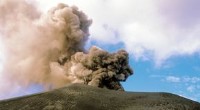
* Explosive eruptions: Due to its high viscosity and trapped gases, andesitic lava tends to erupt explosively.
* Forms steep-sided stratovolcanoes: The lava flows, ash deposits, and explosive eruptions contribute to the formation of these iconic volcanic cones.
Where it's found:
* Subduction zones: Andesitic lavas are commonly found at subduction zones, where oceanic plates are forced beneath continental plates. The melting of the subducted plate creates magma with an intermediate composition.
* Island arcs: Many volcanic islands are composed of andesitic rocks, such as the Aleutian Islands and the islands of Japan.
* Continental margins: Andesitic volcanoes also occur along continental margins, where subduction zones are active.
Examples of andesitic eruptions:
* Mount St. Helens: The 1980 eruption of Mount St. Helens was a major andesitic eruption that produced a devastating pyroclastic flow.
* Mount Vesuvius: The eruption that buried Pompeii and Herculaneum was andesitic and resulted in a large-scale pyroclastic flow.
In summary, andesitic lava is a unique and powerful force of nature, responsible for the creation of some of the world's most iconic volcanoes and shaping the Earth's surface.