Landforms:
* U-shaped valleys: Glaciers carve out wide, U-shaped valleys with steep, almost vertical sides and a flat bottom. This contrasts with V-shaped valleys carved by rivers.
* Cirques: Bowl-shaped depressions at the head of a valley, often containing a small lake (tarn). These form where glaciers originate.
* Aretes: Sharp, jagged ridges that separate two adjacent cirques.
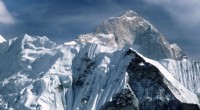
* Horns: Pyramidal peaks formed when three or more cirques intersect.
* Hanging valleys: Smaller valleys that drop off sharply into a larger, main valley. These form when a tributary glacier erodes a valley at a slower pace than the main glacier.
* Fjords: Deep, narrow inlets of the sea, often with steep sides, formed when glacial valleys are submerged by rising sea levels.
* Moraines: Piles of unsorted rock debris deposited by glaciers.
* Terminal moraine: Ridge of debris at the furthest point the glacier reached.
* Lateral moraine: Ridge of debris along the sides of the glacier.
* Medial moraine: Ridge of debris formed when two glaciers merge.
* Drumlins: Elongated hills of glacial till, often shaped like an inverted spoon. These form beneath the ice as the glacier moves over its deposits.
Rock Features:
* Striations: Grooves and scratches on bedrock caused by rocks embedded in the base of the glacier. These indicate the direction of glacial movement.
* Polished rock surfaces: Glaciers can smooth and polish rock surfaces as they scrape over them.
* Chatter marks: Small, crescent-shaped grooves on rock surfaces, formed by rocks being dragged across the bedrock by the glacier.
* Erratics: Large boulders that are different from the local bedrock. These were transported by glaciers from distant locations.
Other Evidence:
* Glacial till: Unsorted, poorly stratified sediment deposited by glaciers.
* Glacial outwash: Sorted, well-stratified sediment deposited by meltwater flowing from the glacier.
* Glacial lakes: Lakes that form in depressions carved by glaciers.
* Permafrost: Permanently frozen ground, often found in areas that were glaciated.
To confirm that a particular area was eroded by a glacier, multiple lines of evidence are usually needed. However, the presence of any of the features mentioned above can strongly suggest that a glacier once existed there.