Crust:
* Definition: The outermost, rigid, and rocky layer of the Earth.
* Composition: Mostly composed of silicate minerals.
* Types: There are two types of crust:
* Oceanic crust: Thinner, denser, and younger, made up of basalt and gabbro.
* Continental crust: Thicker, less dense, and older, composed mainly of granite and other felsic rocks.
* Thickness: Varies greatly, ranging from 5-70 kilometers (3-43 miles).
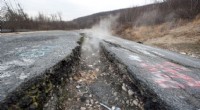
* Importance: The crust is where we live, where continents and ocean basins are formed, and where geological processes like volcanism and earthquakes occur.
Mantle:
* Definition: The layer beneath the crust, making up the majority of Earth's volume.
* Composition: Primarily composed of silicate minerals, with increasing iron and magnesium content with depth.
* Behavior: Behaves like a solid but can flow very slowly over long periods due to extreme heat and pressure.
* Thickness: About 2,900 kilometers (1,800 miles) thick.
* Importance: The mantle drives plate tectonics, the process that shapes the Earth's surface through the movement of the crust. It is also the source of magma for volcanoes.
Core:
* Definition: The Earth's innermost layer, made up of two parts:
* Outer core: Liquid layer composed mostly of iron and nickel.
* Inner core: Solid ball of iron and nickel, despite immense temperatures due to immense pressure.
* Composition: Mostly iron and nickel, with small amounts of sulfur, silicon, and oxygen.
* Thickness: About 2,200 kilometers (1,367 miles) thick.
* Importance: The Earth's magnetic field is generated within the outer core, which protects us from harmful solar radiation.
In summary: The crust, mantle, and core form the Earth's internal structure, each playing crucial roles in geological processes and shaping the planet we know.