Here's how it works:
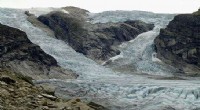
* Glacier Erosion: As a glacier moves, it picks up rocks, soil, and sediment. This material gets embedded within the ice.
* Deposition: When the glacier melts, the material it carried is deposited. This deposited material forms a moraine.
There are several types of moraines:
* Terminal moraine: Forms at the farthest point reached by a glacier.
* Lateral moraine: Forms along the sides of a glacier.
* Medial moraine: Forms when two glaciers merge and their lateral moraines join.
* Ground moraine: Forms beneath a glacier as it retreats.
Besides moraines, glaciers can also build up other landforms like:
* Drumlins: Elongated hills formed by the deposition of glacial till.
* Eskers: Long, winding ridges of sand and gravel deposited by meltwater streams flowing within or beneath a glacier.
* Kames: Small, conical hills of sand and gravel deposited by meltwater.
So, while moraines are the most prominent, glaciers can create a diverse range of landforms through their erosive and depositional power.