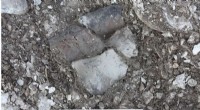
Inorganic sediment refers to naturally occurring solid materials derived from the breakdown of rocks and minerals, excluding those formed by living organisms. This means it's not formed through biological processes like fossilization or the accumulation of organic matter.
Here are some key aspects of inorganic sediment:
Origin:
* Weathering and Erosion: The primary source of inorganic sediment is the breakdown of rocks and minerals through weathering (physical and chemical) and erosion (transportation by wind, water, or ice).
* Volcanic Activity: Volcanic eruptions can produce ash, pumice, and other fragmented materials that contribute to inorganic sediments.
* Cosmic Dust: Tiny particles from space can also contribute to the deposition of inorganic sediments.
Types:
* Clastic Sediment: This is the most common type, consisting of fragments of pre-existing rocks and minerals, ranging in size from clay particles to boulders. Examples include:
* Sand: Composed of quartz, feldspar, and other mineral grains.
* Silt: Finer than sand, but larger than clay.
* Clay: The finest-grained sediment, often formed by the weathering of feldspar.
* Conglomerate and Breccia: Rounded and angular gravel, respectively.
* Chemical Sediment: These sediments form through chemical reactions in water, often driven by evaporation or changes in temperature. Examples include:
* Limestone: Forms from the precipitation of calcium carbonate.
* Halite (Rock Salt): Formed by the evaporation of seawater.
* Gypsum: Another evaporite mineral.
* Biogenic Sediment: Although technically inorganic, some sediments are formed through biological processes but don't contain organic matter. Examples include:
* Diatomite: Made up of fossilized diatoms (algae).
* Radiolarite: Composed of the skeletal remains of radiolarians (single-celled organisms).
Significance:
* Rock Formation: Inorganic sediments accumulate over time and undergo lithification (compaction and cementation) to form sedimentary rocks.
* Environmental Clues: The type, composition, and distribution of inorganic sediments can provide insights into past environments, climate conditions, and geological history.
* Economic Resources: Many inorganic sediments have economic importance, such as sand and gravel for construction, limestone for cement production, and salt for various industries.
Example: A sandstone found in a desert environment would be considered an inorganic sediment. It was formed by the weathering and erosion of pre-existing rocks (probably igneous or metamorphic), transported by wind, and deposited in a sand dune. Over time, the sand grains became cemented together to form the sandstone.
Understanding inorganic sediments is crucial in Earth science for studying geological processes, reconstructing past environments, and exploring natural resources.