Composition:
* Low Oxygen: The early atmosphere had virtually no free oxygen (O2). This is a stark contrast to our current oxygen-rich environment.
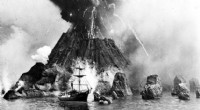
* Volcanic Gases: The dominant gases were likely:
* Carbon Dioxide (CO2): Released from volcanic eruptions, it was a significant greenhouse gas.
* Nitrogen (N2): A significant component, but not as active as CO2.
* Methane (CH4): Another powerful greenhouse gas, likely present in significant amounts.
* Hydrogen Sulfide (H2S): A toxic gas likely present in the early atmosphere.
* Ammonia (NH3): A gas that could have been present but likely not in large amounts.
* Water Vapor (H2O): Present in varying amounts, depending on volcanic activity and cooling periods.
Evolution of Oxygen:
* Early Photosynthesis: Around 3.5 billion years ago, single-celled organisms called cyanobacteria evolved the ability to perform photosynthesis, producing oxygen as a byproduct. However, this oxygen was initially absorbed by the oceans and reacted with iron, forming iron oxide (rust).
* Great Oxidation Event: Around 2.4 billion years ago, the oceans became saturated with oxygen. This led to the "Great Oxidation Event," where oxygen began to accumulate in the atmosphere. This event had a profound impact on life on Earth, causing mass extinctions among anaerobic organisms and paving the way for the evolution of complex life.
Key Features:
* Thick and Dense: The Precambrian atmosphere was likely much thicker and denser than our current atmosphere due to the high levels of greenhouse gases.
* Greenhouse Effect: This thick atmosphere resulted in a strong greenhouse effect, leading to much higher surface temperatures than today.
* UV Radiation: The lack of an ozone layer (O3) meant that the Earth's surface was bombarded with intense ultraviolet (UV) radiation, making it a challenging environment for life.
Understanding the Precambrian Atmosphere:
* Geological Evidence: The composition and evolution of the Precambrian atmosphere are studied through analyzing ancient rocks, minerals, and fossils.
* Climate Modeling: Scientists use computer models to simulate the early atmosphere, helping to understand its conditions and how it changed over time.
The Precambrian atmosphere was a dynamic and changing environment that ultimately laid the groundwork for the oxygen-rich atmosphere we breathe today. This period saw the emergence of life and the first steps in the evolution of Earth's habitable environment.