1. Seismic Waves:
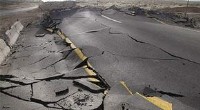
* Earthquakes: These events create vibrations (seismic waves) that travel through the Earth.
* Seismometers: These instruments detect and record the seismic waves.
* Analysis: By studying the speed, path, and changes in the waves as they travel through the Earth, scientists can infer the composition and structure of the interior layers. This is similar to how doctors use ultrasound to "see" inside the human body.
2. Volcanic Activity:
* Magma: The molten rock that erupts from volcanoes originates deep within the Earth's mantle.
* Chemical analysis: Studying the composition of volcanic rocks and gases can reveal information about the materials present in the mantle.
3. Gravity Measurements:
* Gravity anomalies: Variations in the Earth's gravitational field can be detected by precise measurements.
* Density: These variations indicate differences in density within the Earth, suggesting different types of materials.
4. Magnetic Field:
* Earth's core: The Earth's magnetic field is generated by the movement of molten iron in the outer core.
* Magnetic measurements: Studying the magnetic field strength and variations provides insights into the core's composition and dynamics.
5. Meteorites:
* Primitive meteorites: These are believed to have formed early in the solar system's history and contain materials similar to those found in the Earth's mantle.
* Compositional analysis: Studying the composition of meteorites helps scientists understand the composition of the Earth's interior.
6. Laboratory Experiments:
* High-pressure simulations: Scientists recreate the extreme conditions of Earth's interior in laboratories.
* Material properties: By studying how materials behave under such conditions, they can better understand the behavior of Earth's deep interior.
7. Deep Drilling:
* Scientific drilling projects: These efforts, though limited in depth, provide direct samples of rock from the Earth's crust and upper mantle.
By combining these methods, scientists have built a comprehensive understanding of the Earth's internal structure, even though we've only scratched the surface!