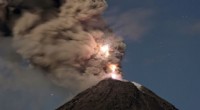
1. Uniformitarianism: This principle, often summarized as "the present is the key to the past," states that the geological processes we see today are the same processes that have shaped the Earth throughout its history. While the intensity and rate of these processes might vary, the underlying mechanisms are the same.
2. Superposition: In undisturbed rock layers, the oldest rocks are found at the bottom, and the youngest at the top. This principle is crucial for dating rocks and understanding the geological history of an area.
3. Original Horizontality: Sedimentary layers are initially deposited horizontally. If they are tilted or folded, it's evidence of later tectonic forces.
4. Lateral Continuity: Sedimentary layers extend laterally for great distances unless they are interrupted by some barrier.
5. Cross-Cutting Relationships: Any geological feature that cuts across another feature is younger than the feature it cuts. For example, a fault cutting through rock layers is younger than those layers.
6. Fossil Succession: Fossils appear in a specific order in the rock record, with older fossils found in lower layers and younger fossils in higher layers. This principle helps date rocks and reconstruct the history of life on Earth.
7. Plate Tectonics: The theory of plate tectonics is the unifying theory of geology, explaining the movement of Earth's lithosphere, the formation of mountains, earthquakes, and volcanoes, and the distribution of continents and oceans.
8. Rock Cycle: The rock cycle describes the continuous transformation of rocks from one type to another through geological processes like weathering, erosion, sedimentation, and metamorphism.
9. Geologic Time Scale: Geologists use the geologic time scale to organize and categorize Earth's history, based on major geological events and changes in life forms.
These principles are not just abstract concepts; they are applied in real-world situations to:
* Interpret rock formations: Understanding the principles allows geologists to deduce the order of events, the age of rocks, and the forces that shaped the landscape.
* Find natural resources: Many resources like oil, gas, and minerals are found within specific geological formations, and these principles help locate them.
* Mitigate geological hazards: Principles like plate tectonics and fault systems help geologists predict and understand natural hazards like earthquakes, volcanic eruptions, and landslides.
While the specific questions and challenges faced by geologists are diverse, these fundamental principles provide a framework for understanding and interpreting the Earth's history and processes.