Landforms:
* U-shaped valleys: Glaciers carve out valleys with a distinctive U-shape, unlike the V-shaped valleys formed by rivers.
* Cirques: These are bowl-shaped depressions at the head of a glacier, often containing a small lake (called a tarn).
* Aretes: These are sharp, jagged ridges formed where two glaciers erode parallel valleys.
* Horns: These are pointed, pyramid-shaped peaks formed when several cirques erode around a single point.
* Fjords: These are long, narrow inlets of the sea formed by glaciers that have eroded valleys below sea level.
* Moraines: These are ridges of rock and sediment deposited by glaciers, often marking the edges of the ice.
* Drumlins: These are elongated hills of glacial till, formed by the movement of ice over sediment.
* Eskers: These are long, winding ridges of sand and gravel deposited by meltwater flowing within or beneath a glacier.
* Kames: These are conical hills of sand and gravel deposited by meltwater flowing out from the edge of a glacier.
Other Evidence:
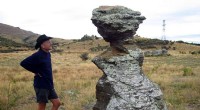
* Glacial erratics: These are large boulders that have been transported by glaciers and deposited far from their original source.
* Striations: These are scratches or grooves on bedrock caused by the movement of glaciers.
* Polished bedrock: Glaciers can polish bedrock surfaces, giving them a smooth, shiny appearance.
* Till: This is a mixture of unsorted sediment deposited by glaciers, containing a variety of rock types, sizes, and shapes.
Modern Glaciers:
* Ice cores: These are long cylinders of ice extracted from glaciers, which contain layers of snow that have accumulated over time. These layers can be analyzed to reconstruct past climate conditions.
* Satellite imagery: Satellites can track the movement of glaciers and monitor their changes over time.
The presence of these features can indicate the former extent of glaciers, their direction of movement, and the climatic conditions that existed during the time they were present.