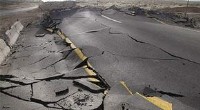
1. Weathering and Erosion:
* Release of Carbon Dioxide: Weathering of rocks, especially silicate rocks, releases carbon dioxide (CO2) into the atmosphere. This process, known as chemical weathering, involves reactions between rocks and water, leading to the breakdown of minerals and the release of CO2.
* Dust and Particulate Matter: Erosion, the process of transporting weathered rock fragments, releases dust and particulate matter into the atmosphere. These particles can act as condensation nuclei, aiding in cloud formation and precipitation.
2. Volcanism:
* Volcanic Gases: Volcanic eruptions release vast quantities of gases, including CO2, sulfur dioxide (SO2), water vapor (H2O), and others. These gases have a significant impact on the atmosphere, affecting climate and atmospheric chemistry.
* Climate Change: Volcanic CO2 emissions contribute to the greenhouse effect, warming the planet. However, volcanic SO2 emissions can also lead to cooling by reflecting sunlight back into space.
3. Plate Tectonics:
* Mountain Building: Plate tectonics, responsible for mountain formation, influences atmospheric circulation patterns. Mountains create barriers to air flow, influencing wind patterns and precipitation.
* Ocean Currents: Plate tectonics also influences ocean currents, which play a vital role in distributing heat around the globe and regulating global climate.
4. Long-Term Impacts:
* Carbon Cycle: The rock cycle is an integral part of the long-term carbon cycle. Over millions of years, the weathering of rocks removes CO2 from the atmosphere, while volcanic eruptions release CO2 back into the atmosphere. This process helps regulate Earth's climate over geological timescales.
* Oxygen Production: While not directly related to the rock cycle, the weathering of rocks can indirectly influence oxygen production. Weathering of rocks releases nutrients into the soil, promoting plant growth. Plants, through photosynthesis, produce oxygen, which contributes to the Earth's atmosphere.
In summary, the rock cycle's influence on the Earth's atmosphere is multifaceted and complex. It plays a role in:
* Regulating atmospheric CO2 levels: through weathering and volcanic emissions.
* Affecting climate patterns: through volcanic eruptions, mountain formation, and ocean currents.
* Influencing cloud formation and precipitation: through dust and particulate matter released during erosion.
* Contributing to the long-term carbon cycle: which helps stabilize Earth's climate over geological timescales.
It's important to note that the rock cycle's impact on the atmosphere is intertwined with other Earth systems, making it a complex and fascinating interplay of processes.