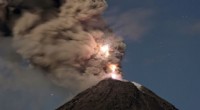
1. Magma Ascent: Magma, generated deep within the Earth, rises due to buoyancy and pressure.
2. Volcanic Vent: The magma reaches the surface through a volcanic vent, a weakness in the Earth's crust.
3. Lava Flow: As the magma erupts, it becomes lava. Lava flows across the surface, cooling and solidifying as it moves.
4. Rock Formation: As the lava cools, it crystallizes, forming volcanic rocks. The type of rock formed depends on the composition of the lava and the rate of cooling.
Here are some examples of volcanic rocks formed through extrusion:
* Basalt: A dark-colored, fine-grained rock, often found in shield volcanoes.
* Andesite: An intermediate-colored rock, found in stratovolcanoes.
* Rhyolite: A light-colored, glassy rock, found in explosive eruptions.
Other processes that can contribute to surface rock formation on volcanoes include:
* Explosive Eruptions: These eruptions throw ash, pumice, and other fragments into the air, which can solidify and form volcanic rocks.
* Pyroclastic Flows: These are fast-moving currents of hot gas and volcanic debris that can travel at high speeds, depositing volcanic materials that form rocks.
While extrusion is the primary process for forming volcanic rocks, these other processes play significant roles in shaping the landscape and creating diverse rock formations.