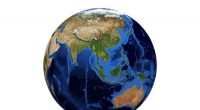
Here's what the rotation of the Earth causes:
* Day and Night: The rotation of the Earth causes different parts of the planet to face the Sun at different times. This is why we experience day when our side of the Earth faces the Sun, and night when our side faces away from the Sun.
* Time Zones: To account for the different times of day around the globe, the world is divided into 24 time zones. Each time zone represents one hour of the Earth's rotation.
* Coriolis Effect: This is the apparent deflection of moving objects due to the Earth's rotation. It influences weather patterns, ocean currents, and even the direction of hurricanes.
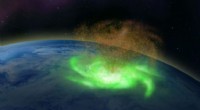
* Earth's Magnetic Field: The Earth's rotation is believed to contribute to the generation of its magnetic field. This field protects us from harmful solar radiation.
In addition to the rotation on its axis, the Earth also revolves around the Sun, causing the seasons.
The rotation of the Earth is a fundamental aspect of our planet's existence and plays a crucial role in shaping our world.