Here's what that means:
* Contour Lines: These lines connect points of equal elevation on the map.
* Closed Contour Lines: When contour lines form a closed loop, it indicates an enclosed area with a consistent elevation.
* Hachures: Short, perpendicular lines drawn inside the closed contour lines. These lines point towards the lower elevation within the depression, giving you a sense of its shape and depth.
Think of it like this: Imagine you're looking down at a bowl. The contour lines would be the rim of the bowl, and the hachures would be the lines radiating down the inside of the bowl.
Here's how to read a depression on a topographic map:
1. Identify closed contour lines.
2. Look for hachures inside the closed lines.
3. The direction of the hachures points towards the lowest point of the depression.
Examples of depressions:
* Craters: The depression caused by a meteor impact.
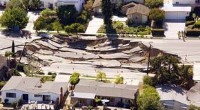
* Sinkholes: A depression in the ground formed by the collapse of underlying rock.
* Valleys: A low area of land between hills or mountains.
By understanding how depressions are represented on a topographic map, you can gain valuable insights about the landscape and its features.