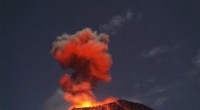
* Volcanoes: These are openings in the Earth's crust where molten rock, ash, and gases erupt from the Earth's interior.
* Magma: Molten rock beneath the Earth's surface is called magma.
* Lava: When magma reaches the Earth's surface, it is called lava.
* Cooling and Solidification: As lava cools and solidifies, it forms volcanic rocks.
Here are some specific locations where volcanic rocks form:
* Subduction Zones: These are areas where one tectonic plate slides beneath another. The heat and pressure melt the rock, creating magma that rises to the surface and forms volcanoes.
* Mid-Ocean Ridges: These are underwater mountain ranges where new ocean crust is created. Magma rises to the surface at these ridges, forming volcanic rocks that make up the ocean floor.
* Hot Spots: These are areas where magma rises from deep within the Earth's mantle, creating volcanoes in the middle of tectonic plates.
Types of Volcanic Rocks:
The specific type of volcanic rock that forms depends on the chemical composition of the magma and the rate at which it cools. Some common types of volcanic rocks include:
* Basalt: A dark-colored, fine-grained rock that is common in oceanic volcanoes.
* Andesite: A medium-colored, fine-grained rock that is common in subduction zones.
* Rhyolite: A light-colored, fine-grained rock that is common in continental volcanoes.
* Tuff: A rock made up of volcanic ash and fragments.
So, volcanic rocks are formed directly at volcanoes through the eruption and cooling of lava. They are found in diverse locations, providing valuable clues about Earth's geological history and processes.