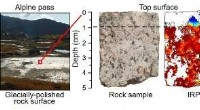
* They carve and shape the land: Both glaciers and bulldozers move over the land, scraping and eroding the surface. Glaciers use their immense weight and the abrasive power of rocks and debris embedded within them to carve valleys, polish rocks, and create other landforms. Bulldozers use their blades to push dirt and rocks around, clearing land and creating new terrain.
* They transport material: Glaciers carry sediment, rocks, and debris frozen within their ice. As they move, they transport this material and deposit it elsewhere, creating landforms like moraines and drumlins. Bulldozers also move material, but they typically do so in a more controlled and directed way.
* They leave behind distinctive features: Both glaciers and bulldozers leave behind distinctive features in their wake. Glaciers create U-shaped valleys, hanging valleys, and other characteristic landforms. Bulldozers create piles of dirt, trenches, and other signs of their work.
However, it's important to note some key differences:
* Scale and Time: Glaciers operate on a much larger scale and over much longer timescales than bulldozers. They can move vast amounts of material and sculpt entire landscapes over thousands or even millions of years. Bulldozers are relatively small and operate over shorter periods of time.
* Mechanism of Movement: Glaciers move due to gravity and the pressure of their own weight. Bulldozers move due to engines and mechanical systems.
* Purpose: Bulldozers are designed and operated for specific tasks, usually involving construction or land clearing. Glaciers are natural forces that operate independently of human control.
So while glaciers and bulldozers share some similarities in their ability to move and modify the land, they are fundamentally different in their scale, mechanism of movement, and purpose.