Here's a breakdown of the reasons and how it works:
1. Earth's Internal Heat:
* Radioactive Decay: The Earth's interior contains radioactive elements like uranium, thorium, and potassium. These elements decay and release heat energy. This is the primary source of the Earth's internal heat.
* Residual Heat: The Earth formed from the accretion of smaller bodies, and this process generated a significant amount of heat. Some of this primordial heat remains trapped within the Earth.
2. Geothermal Gradient:
* Average Increase: The average geothermal gradient is about 25°C per kilometer (or about 1°F per 100 feet). This means that for every kilometer you go deeper into the Earth, the temperature increases by about 25°C.
* Variations: The geothermal gradient can vary depending on factors like location, rock type, and the presence of volcanic activity. For example, the gradient can be higher near active volcanoes.
3. Temperature Zones:
* Crust: The Earth's outermost layer, the crust, is relatively cool. Temperatures increase gradually within the crust.
* Mantle: The thick layer beneath the crust, the mantle, is hotter. Temperatures increase significantly within the mantle, reaching about 3,000°C (5,432°F) at the core-mantle boundary.
* Core: The Earth's core is the hottest part of the planet. Temperatures at the inner core can reach up to 5,200°C (9,392°F).
4. Importance of Geothermal Gradient:
* Plate Tectonics: The geothermal gradient drives the movement of tectonic plates. The heat from the Earth's interior causes convection currents in the mantle, which move the plates.
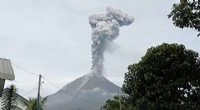
* Volcanism: Volcanic eruptions are a result of the geothermal gradient. Hot magma rises from the mantle and erupts at the surface.
* Geothermal Energy: The heat from the Earth's interior can be harnessed to generate electricity through geothermal power plants.
In conclusion, the Earth's interior is incredibly hot due to radioactive decay and residual heat. This heat creates a geothermal gradient, causing temperatures to increase steadily as you go deeper into the Earth. This gradient plays a critical role in various geological processes, including plate tectonics, volcanism, and geothermal energy production.