1. Rapid Burial:
* Why it's essential: The organism needs to be buried quickly after death, preventing scavengers, bacteria, and decomposition from destroying the remains.
* How it happens: This often occurs in environments with a high sediment accumulation rate, like:
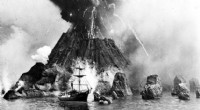
* Volcanic eruptions
* Floods
* Mudslides
* Ocean floors
2. Anoxic Environment:
* Why it's essential: The absence of oxygen slows down decomposition and decay, preserving the organism's structure.
* How it happens: Environments with little to no oxygen, like:
* Deep ocean sediments
* Swampy areas
* Lake bottoms
3. Suitable Material:
* Why it's essential: Hard parts like bones, shells, teeth, and exoskeletons are more likely to fossilize than soft tissues.
* How it happens: The presence of these hard parts provides a resistant framework that can withstand the forces of decay and burial.
4. Mineralization:
* Why it's essential: The process of fossilization involves minerals from the surrounding sediment gradually replacing the original organic material.
* How it happens: Minerals like calcite, silica, or iron pyrite infiltrate the organism's remains, preserving its shape and structure.
5. Time:
* Why it's essential: Fossilization is a slow process that takes thousands, if not millions of years.
* How it happens: Over time, the replacement of organic material with minerals continues, solidifying the fossil.
6. Preservation:
* Why it's essential: Once formed, the fossil needs to remain undisturbed and protected from erosion and weathering.
* How it happens: Often, fossils are found in layers of rock that are protected by other layers, or in environments where erosion rates are low.
It's important to remember that:
* Not all organisms fossilize: The conditions needed for fossilization are very specific, and only a small percentage of organisms ever become fossils.
* Fossil formation can be complex: Various factors can influence the fossilization process, leading to different types of fossils (like casts, molds, or petrified remains).
Fossils are valuable windows into the past, providing us with evidence of life on Earth throughout history. Understanding the conditions necessary for their formation helps us interpret these amazing records and learn about ancient ecosystems and the evolution of life.