Here's how they connect:
* Plate Boundaries: Earth's outer layer is made up of large plates that move and interact. These interactions cause the majority of earthquakes, volcanic activity, and the formation of mountains.
* Convergent Boundaries: When two plates collide, one often subducts (slides) beneath the other. This process generates intense heat and pressure, melting rock and creating magma that rises to the surface, resulting in volcanoes. The collision also compresses and deforms the crust, leading to mountain ranges.
* Examples: The Andes Mountains, formed by the Nazca Plate subducting under the South American Plate, are a prime example of this. The Pacific Ring of Fire, a zone of intense seismic and volcanic activity around the Pacific Ocean, is another.
* Divergent Boundaries: Where plates pull apart, magma rises from the mantle to fill the gap. This creates new oceanic crust and volcanic activity along mid-ocean ridges. The mid-Atlantic Ridge is an example of this.
* Transform Boundaries: Plates slide horizontally past each other at transform boundaries. While they don't directly form volcanoes, the friction between the plates causes earthquakes. The San Andreas Fault in California is a prominent example.
In summary:
* Earthquakes: Primarily occur at plate boundaries where rocks are subjected to stress and movement.
* Mountain Ranges: Often form at convergent boundaries where plates collide and compress the crust.
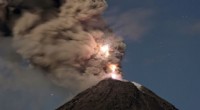
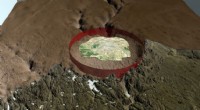
* Volcanic Activity: Mostly associated with convergent boundaries (subduction zones) and divergent boundaries (mid-ocean ridges), where magma rises to the surface.
Therefore, understanding plate tectonics helps us understand the relationship between earthquakes, mountain ranges, and volcanic activity, and predict where these phenomena are likely to occur.