1. Evaporation: Water from oceans, lakes, rivers, and even the ground evaporates into the atmosphere, turning into water vapor.
2. Condensation: As warm, moist air rises, it cools. This cooling causes the water vapor to condense into tiny water droplets or ice crystals, forming clouds.
3. Collision and Coalescence: Water droplets collide with each other and combine, growing larger and heavier. Ice crystals also collide and stick together, forming snowflakes.
4. Precipitation: Eventually, these droplets or snowflakes become too heavy to stay suspended in the air and fall to Earth as precipitation.
The type of precipitation that falls to Earth depends mainly on:
1. Temperature:
* Rain: When the temperature in the cloud and at the ground is above freezing (0°C or 32°F), precipitation falls as rain.
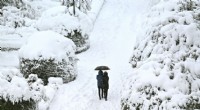
* Snow: When the temperature throughout the cloud and at the ground is below freezing, precipitation falls as snow.
* Sleet: When rain falls through a layer of freezing air near the ground, it freezes into small, icy pellets called sleet.
* Freezing Rain: When rain falls through a layer of freezing air near the ground but doesn't completely freeze, it falls as supercooled water droplets that freeze upon contact with surfaces, forming a glaze of ice.
2. Cloud Type:
* Stratus clouds: These flat, gray clouds usually produce drizzle or light rain.
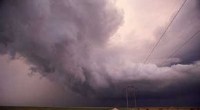
* Cumulonimbus clouds: These large, towering clouds often produce heavy rain, thunderstorms, hail, and tornadoes.
* Nimbostratus clouds: These dark, gray clouds produce steady, widespread rain.
* Cumulus clouds: These puffy, white clouds typically don't produce precipitation, but they can develop into cumulonimbus clouds.
3. Other Factors:
* Wind: Wind can affect the size and intensity of precipitation.
* Altitude: Higher altitudes generally have colder temperatures, which can lead to snow even when lower altitudes experience rain.
* Location: Geographic location can influence the type and amount of precipitation. For example, coastal areas tend to receive more rain than inland areas.
In summary, the type of precipitation is determined by the interplay of temperature, cloud type, and other environmental factors.