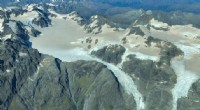
* Mountains form through tectonic plate movement: Mountains are primarily formed by the collision of tectonic plates. These massive plates, which make up the Earth's outer layer, move and interact with each other, causing the land to buckle and fold, forming mountain ranges.
* Seafloor rocks are often sedimentary: Rocks found on the seafloor are often sedimentary rocks, formed from the accumulation of sediment over millions of years. While these rocks can be uplifted by tectonic forces, they are not the primary building blocks of mountains.
* Igneous rocks play a key role: Mountains often involve the intrusion of magma from deep within the Earth, creating igneous rocks. These rocks are harder and more resistant to erosion, making them more likely to form the core of mountains.
However, rocks from the sea play a role in mountain formation indirectly:
* Sedimentation and erosion: The erosion of rocks from the seafloor and coastal areas can contribute to the accumulation of sediment that eventually becomes part of the mountains through the processes described above.
* The rock cycle: The seafloor rocks are part of the rock cycle. They can be uplifted and exposed to weathering and erosion, contributing to the formation of new rocks that could eventually become part of mountains.
So, while seafloor rocks don't form mountains directly, they play an important role in the larger geological processes that create these majestic landforms.