1. The Rotating Earth:
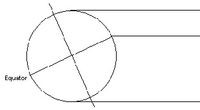
* Earth spins on its axis from west to east. This rotation creates an apparent force that acts on objects moving across its surface.
2. The Coriolis Force:
* The Coriolis Force is not a real force but rather an inertial force arising from Earth's rotation. It deflects moving objects to the right in the Northern Hemisphere and to the left in the Southern Hemisphere.
3. Impact on Surface Currents:
* Deflection: As surface currents are driven by wind, the Coriolis Force deflects them. This deflection is most noticeable over long distances.
* Gyres: The Coriolis Effect plays a major role in the formation of large ocean gyres – circular systems of currents. It causes currents to curve and eventually form these large rotating patterns.
* Ekman Spiral: The Coriolis Force also influences the vertical structure of currents. The Ekman Spiral describes how currents are deflected at increasing depths, creating a spiral pattern.
* Upwelling and Downwelling: The Coriolis Effect contributes to upwelling and downwelling zones where deeper, nutrient-rich water is brought to the surface.
Simplified Analogy:
Imagine a carousel rotating counterclockwise. If you try to walk straight across the carousel, the rotation will make you appear to veer to the right. Similarly, surface currents are deflected by the Earth's rotation.
Consequences:
* Global Circulation: The Coriolis Effect drives major ocean currents that redistribute heat and nutrients globally, influencing climate patterns and marine ecosystems.
* Weather Patterns: Ocean currents, shaped by the Coriolis Force, influence regional weather patterns, such as coastal climates and the distribution of precipitation.
* Marine Life: The Coriolis Effect contributes to the distribution and abundance of marine organisms by influencing nutrient availability, temperature, and oceanographic conditions.
In summary, Earth's rotation exerts a powerful influence on surface currents through the Coriolis Effect. This phenomenon shapes the global ocean circulation patterns, contributing to climate regulation, marine ecosystems, and weather patterns.