Here's why:
* Cleavage refers to the tendency of a mineral to break along specific, smooth planes of weakness.
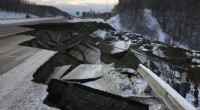
* Fracture describes any break that doesn't follow a specific cleavage plane.
There are different types of fractures, including:
* Conchoidal: Smooth, curved surfaces, like a seashell (e.g., quartz)
* Hackly: Jagged, sharp edges (e.g., metals)
* Uneven: Rough, irregular surfaces (e.g., most minerals)
* Splintery: Thin, elongated fragments (e.g., asbestos)
* Fibrous: Like fibers or threads (e.g., gypsum)
Let me know if you'd like more details about any specific type of fracture!