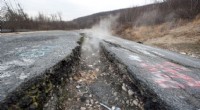
* Formation Mechanism: Folded mountains form through continental collision. When two continental plates collide, their edges buckle and fold, creating the characteristic mountain ranges. Mid-ocean ridges, on the other hand, form due to seafloor spreading. New oceanic crust is created as magma rises from the mantle and solidifies, pushing the existing crust apart.
* Crust Type: Folded mountains are primarily associated with continental crust, which is thicker and less dense than oceanic crust. Mid-ocean ridges are formed entirely from oceanic crust, which is thinner and denser.
* Geological Features: Mid-ocean ridges are characterized by a central rift valley, volcanic activity, and hydrothermal vents. Folded mountains typically have a complex structure with layers of rock that have been uplifted, folded, and faulted.
Instead of folded mountains, you would find features like:
* Central Rift Valley: This is the site where new crust is being formed.
* Mid-Ocean Ridge Mountains: These are not folded mountains but rather elevated areas of oceanic crust due to the upwelling magma.
* Volcanic Activity: The spreading process often leads to volcanic eruptions along the ridge.
* Hydrothermal Vents: These are openings in the seafloor where heated water rich in minerals emerges.
In summary, the geological processes that create mid-ocean ridges are fundamentally different from those that form folded mountain ranges. They are formed in distinct tectonic environments and involve different types of crust.