Plate Tectonics: The Driving Force
* The Earth's crust is broken into massive pieces called tectonic plates. These plates constantly move, driven by convection currents in the Earth's mantle.
* These movements cause interactions at plate boundaries:
* Convergent boundaries: Where plates collide, one plate can subduct (slide) beneath the other. This leads to volcanic arcs, mountain ranges, and deep earthquakes.
* Divergent boundaries: Where plates move apart, magma rises from the mantle, creating new crust and causing volcanic activity.
* Transform boundaries: Where plates slide past each other horizontally, creating friction and causing earthquakes.
Earthquakes: The Result of Plate Movement
* Earthquakes are the sudden release of energy stored in the Earth's crust. This energy builds up as tectonic plates grind against each other.
* Most earthquakes occur at plate boundaries, where the movement is most intense.
* Fault lines are breaks in the Earth's crust along which movement occurs, often resulting in earthquakes.
Volcanoes: The Expression of Magma
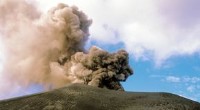
* Volcanoes are openings in the Earth's crust where magma (molten rock) rises to the surface.
* Plate tectonics plays a key role in volcanic activity:
* Subduction zones: As one plate subducts, it melts, forming magma that rises to the surface, creating volcanoes.
* Mid-ocean ridges: Along divergent boundaries, magma rises to create new crust, forming underwater volcanoes.
* Hotspots: These are areas of volcanic activity where plumes of hot mantle rock rise to the surface, creating volcanic islands like Hawaii.
In Summary:
* Plate tectonics is the underlying cause of both earthquakes and volcanoes.
* Earthquakes are the result of the sudden release of energy as tectonic plates move.
* Volcanoes are a consequence of the movement of magma driven by plate tectonics.
Therefore, understanding plate tectonics is crucial for comprehending the dynamics of earthquakes and volcanoes and their potential hazards.