Here's why:
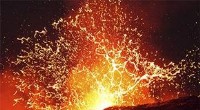
* Basalt is an igneous rock: It forms from rapidly cooling lava, giving the crystals little time to grow large.
* Crystals are microscopic: Basalt is composed of minerals like plagioclase, pyroxene, and olivine. While these minerals do crystallize, the crystals are usually too small to see with the naked eye. They're called microlites.
* Texture matters: Basalt has a fine-grained texture, meaning the crystals are so small they make the rock appear almost glassy.
So, instead of "crystal size" for basalt, we talk about grain size:
* Fine-grained: This is the most common texture for basalt, meaning the crystals are less than 1 mm in size.
* Aphanitic: This term specifically describes rocks with crystals so small they're invisible without a microscope.
Important Note: While typical basalt is fine-grained, there are exceptions. Some basalt varieties might have larger crystals, especially if the cooling process was slower or if the rock experienced later mineral growth. However, this is less common.