* Both carve out landscapes: Both water and glaciers have the power to sculpt the earth's surface. Water erodes through the force of flowing water, carrying away sediment and carving channels. Glaciers, on the other hand, erode by scraping, grinding, and plucking rocks as they move, creating valleys, cirques, and other characteristic glacial landforms.
* Both depend on gravity: Both water erosion and glacial movement are driven by gravity. Water flows downhill, carving channels and eroding the landscape. Glaciers, being massive bodies of ice, are also pulled by gravity and slowly move downhill, carving out valleys and shaping mountains.
* Both create unique landforms: The erosion caused by water and glaciers leaves behind distinctive features. Water erosion creates riverbeds, canyons, and deltas. Glacial erosion results in U-shaped valleys, cirques, and moraines.
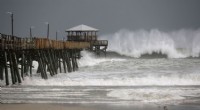
* Both are influenced by climate: Both water erosion and glacial erosion are influenced by climate. Water erosion is more intense in areas with heavy rainfall and rapid runoff. Glaciers form and grow in cold regions with abundant snowfall.
Key Differences
Despite these similarities, water erosion and glacial erosion also have significant differences:
* Mode of erosion: Water erodes by the abrasive power of flowing water and by dissolving soluble rocks. Glaciers erode by the scraping and grinding action of ice and by plucking rocks from the bedrock.
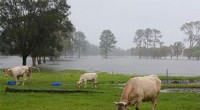
* Speed of erosion: Water erosion can happen relatively quickly, especially during floods and storms. Glacial erosion is much slower, taking thousands or even millions of years to sculpt the landscape.
* Scale of erosion: Water erosion can be localized, such as in a river channel, or widespread, such as during a major flood. Glacial erosion is often on a much larger scale, shaping entire mountain ranges and carving out valleys.
In conclusion, water erosion and glaciers, while different agents of erosion, share some fundamental similarities in their dependence on gravity, ability to carve out landscapes, and impact on landform creation. However, their distinct modes of erosion, speeds, and scales set them apart as unique geological forces.