General:
* Geosphere: This refers to the solid, rocky outer layer of Earth, including the crust and upper mantle.
* Lithosphere: This refers to the rigid outer layer of Earth, consisting of the crust and the uppermost part of the mantle.
* Biosphere: This refers to the part of Earth where life exists, including all living organisms and their environments.
* Hydrosphere: This refers to all the water on Earth, including oceans, lakes, rivers, groundwater, and ice.
* Atmosphere: This refers to the layer of gases surrounding Earth.
Specific Features:
* Continents: The seven large landmasses on Earth (Asia, Africa, North America, South America, Antarctica, Europe, and Australia).
* Oceans: The vast bodies of saltwater that cover most of Earth's surface.
* Mountains: Large landforms that rise above the surrounding area.
* Valleys: Depressions in the Earth's surface, often formed by rivers or erosion.
* Plains: Flat or gently rolling areas of land.
* Deserts: Areas with very low rainfall and limited vegetation.
* Forests: Areas with high density of trees.
* Glaciers: Large masses of ice that move slowly over land.
Scientifically:
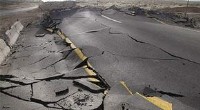
* Tectonic plates: Large sections of Earth's lithosphere that move and interact with each other, causing earthquakes, volcanoes, and mountain formation.
* Landforms: Natural features on Earth's surface, created by geological processes.
* Topographical map: A map that shows the elevation and shape of Earth's surface.
Ultimately, the best way to describe Earth's surface depends on the specific purpose.