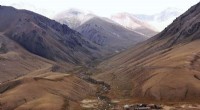
* Limited Water: Deserts receive very little rainfall. This lack of water prevents the breakdown of rocks and the release of minerals into the soil.
* High Evaporation: The intense sun and dry air cause rapid evaporation, leading to the concentration of salts and minerals near the surface. This can make the topsoil saline and less suitable for plant growth.
* Limited Organic Matter: Deserts have sparse vegetation, which means there is little organic matter to decompose and contribute to soil fertility.
* Wind Erosion: Strong winds can carry away fine soil particles, leaving behind a layer of coarser sand and gravel that is relatively poor in minerals.
However, there are some exceptions:
* Desert Pavement: In some deserts, a layer of pebbles and stones called desert pavement forms on the surface. These stones prevent wind erosion and can trap mineral-rich dust blown in from other areas.
* Oases: Areas with water sources, such as oases, can have fertile soil rich in minerals due to the presence of plants and decomposing organic matter.
In summary: While the upper layer of desert soil can sometimes contain high concentrations of certain minerals, it is generally not considered to be rich in minerals due to the harsh conditions and limited nutrient availability.