1. Evaporation: Water from oceans, lakes, rivers, and even soil evaporates into the atmosphere, turning into water vapor.
2. Condensation: As the warm, moist air rises, it cools. This cooling causes the water vapor to condense into tiny water droplets or ice crystals, forming clouds.
3. Cloud Formation: These droplets or crystals collide and grow larger, eventually forming clouds.
4. Precipitation: When the droplets or crystals become too heavy to remain suspended in the air, they fall to the ground as precipitation.
The type of precipitation that falls depends primarily on the temperature of the air and the cloud where it forms:
1. Temperature:
* Warm clouds: When the temperature is above freezing (0°C or 32°F), precipitation falls as rain.
* Cold clouds: When the temperature is below freezing, precipitation can fall as snow, sleet, or freezing rain.
2. Cloud Type:
* Stratus clouds: These are low-lying, flat clouds that produce drizzle or light rain.
* Cumulus clouds: These are puffy, white clouds that produce showers or thunderstorms.
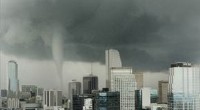
* Cumulonimbus clouds: These are towering, thunderstorm clouds that can produce heavy rain, hail, and even tornadoes.
* Cirrus clouds: These are wispy, high-altitude clouds that do not usually produce precipitation.
Specific Precipitation Types:
* Rain: Liquid water droplets that fall from clouds.
* Snow: Frozen water crystals that fall from clouds.
* Sleet: Frozen raindrops that freeze as they fall through the air.
* Freezing rain: Rain that freezes upon contact with a surface that is below freezing.
* Hail: Balls of ice that form in thunderstorms when water droplets freeze and are carried upward by strong updrafts.
Other factors that influence the type of precipitation:
* Wind: Wind can affect the size and shape of precipitation particles, as well as the direction they fall.
* Altitude: Precipitation is more likely to occur at higher altitudes, where the air is cooler.
* Geography: Mountains and other geographic features can influence precipitation patterns.
Understanding how precipitation forms and the factors that determine its type is crucial for weather forecasting and studying climate patterns.