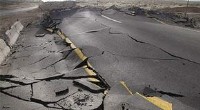
Geological Examples:
* Sedimentary Rocks: Most sedimentary rocks are formed by gravity deposition. As rivers carry sediments downstream, the heavier particles settle first, leading to the formation of layers with different grain sizes. Examples include:
* Conglomerates: Rocks composed of rounded gravel deposited by rivers or glaciers.
* Sandstones: Rocks composed of sand grains deposited in various environments.
* Shales: Rocks composed of fine-grained clay particles deposited in calm water environments.
* Turbidites: Rapid flows of sediment-laden water (turbidity currents) move downslope under gravity, depositing thick layers of sediment on the ocean floor. These deposits are often characterized by graded bedding, where the largest particles settle first.
* Delta Formation: Rivers carry sediment into lakes or oceans, depositing it in a fan-shaped pattern known as a delta. Gravity plays a role in the settling of the sediments, leading to the formation of different layers within the delta.
* Landslides: When slopes become unstable due to factors like heavy rainfall or earthquakes, gravity can cause landslides, resulting in the deposition of rock and soil debris at the base of the slope.
* Glacial Till: Glaciers, moving under the influence of gravity, carry and deposit a mixture of rocks, sand, and clay called till.
Environmental Examples:
* Pollution Settling: Industrial emissions, dust particles, and pollutants released into the air can settle out due to gravity, contributing to air pollution and environmental problems.
* Sedimentation in Reservoirs: As water enters reservoirs, suspended sediments settle to the bottom, reducing the storage capacity of the reservoir and potentially affecting water quality.
* Sedimentation in Wastewater Treatment: In wastewater treatment plants, gravity plays a role in separating solid waste from wastewater, allowing for efficient treatment.
Industrial Examples:
* Sedimentation Tanks: In industries like mining and chemical processing, sedimentation tanks are used to separate solid particles from liquids using gravity.
* Flotation: This process uses gravity to separate different materials based on their densities. For example, in mineral processing, valuable minerals are separated from the waste rock.
Other Examples:
* Dust Settling in a Room: Dust particles in a room settle due to gravity.
* Snow Accumulation: Snowflakes falling from the sky settle on the ground due to gravity.
These examples demonstrate how gravity deposition is a fundamental process involved in various aspects of Earth science, environmental science, and industrial applications.