Here's a breakdown of the most common ways mountains and hills are formed:
1. Folding:
* This is the most common way mountains form.
* When two tectonic plates collide, the pressure forces the rock layers to bend and buckle, creating folds.
* These folds can be gentle, creating rolling hills, or they can be sharp and steep, forming towering mountains.
* Examples: The Himalayas, the Alps, the Appalachian Mountains
2. Faulting:
* This happens when tectonic plates move past each other horizontally, causing fractures in the Earth's crust.
* The rocks on either side of the fault can move up or down, creating blocks of uplifted land.
* If the movement is significant enough, it can form mountains or hills.
* Examples: The Sierra Nevada mountains in California, the Basin and Range province in the western United States
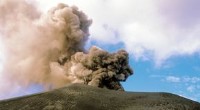
3. Volcanic activity:
* Volcanoes can form both mountains and hills.
* When magma rises from the Earth's mantle and erupts onto the surface, it can build up over time to create a cone-shaped mountain.
* Examples: Mount Fuji in Japan, Mount Kilimanjaro in Tanzania, Mount Vesuvius in Italy
4. Erosion:
* While erosion is usually considered a destructive force, it can also contribute to the formation of hills.
* When wind, water, and ice wear away at existing mountains and plateaus, they can create hills and valleys.
* Examples: The mesas and buttes of the American Southwest, the Badlands National Park in South Dakota
5. Uplift:
* In some cases, large areas of land can be uplifted by tectonic forces, creating plateaus or broad, flat-topped mountains.
* Examples: The Colorado Plateau, the Tibetan Plateau
Key Differences between Mountains and Hills:
* Elevation: Mountains generally have a higher elevation than hills, typically rising at least 2,000 feet above their surroundings.
* Shape: Mountains are often characterized by sharp peaks and steep slopes, while hills tend to have more rounded summits and gentler slopes.
* Size: Mountains are generally larger than hills, although there can be exceptions.
It's important to remember that these processes can work together to form mountains and hills. For example, a mountain range might be created by folding, then further shaped by faulting and erosion.