Mountains are majestic giants of the earth, sculpted by powerful forces deep within the planet. Two primary mechanisms lead to their formation: folding and faulting.
1. Fold Mountains: The Gentle Bend
* Formation: Imagine a carpet being pushed from both sides. The fabric wrinkles and folds. Similarly, fold mountains arise when immense pressure from tectonic plates converging pushes layers of rock upwards, creating waves and folds.
* Process:
* Compression: Two tectonic plates collide, squeezing and compressing the layers of rock between them.
* Folding: The pressure causes the rock to bend and fold, creating anticlines (upward folds) and synclines (downward folds).
* Erosion: Over time, the exposed anticlines are weathered and eroded, leaving behind the towering peaks and valleys we see as fold mountains.
* Examples:
* The Himalayas in Asia
* The Alps in Europe
* The Appalachian Mountains in North America
2. Fault Mountains: The Broken Surface
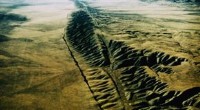
* Formation: Imagine a piece of paper being torn in half. Fault mountains arise when the earth's crust breaks, creating fractures called faults.
* Process:
* Tension or Compression: Tension (pulling) or compression (pushing) forces cause the crust to fracture.
* Displacement: One side of the fault moves relative to the other, either upwards (horst) or downwards (graben).
* Erosion: The exposed blocks are then shaped by erosion, leading to towering cliffs and steep slopes.
* Examples:
* The Sierra Nevada in North America
* The Grand Teton National Park in Wyoming
* The Rhine Valley in Europe
In Summary:
Fold mountains are the result of bending rock layers under pressure, while fault mountains are formed by breaking the earth's crust. Both processes are driven by the dynamic movement of tectonic plates, shaping our planet's surface over millions of years.