Surface Features:
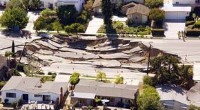
* Sinkholes (or dolines): Circular depressions formed when the surface collapses into an underground cavity. They can range in size from a few feet to hundreds of yards across.
* Uvalas: Larger depressions formed by the merging of several sinkholes.
* Poljes: Large, flat, closed depressions that can be several miles long and wide. They often have a stream that flows into them but disappears underground.
* Caves: Formed by the dissolving of limestone underground, they can be vast networks of tunnels and chambers.
* Canyons: Deep, narrow valleys formed by the erosion of water along fractures in the rock.
* Blind Valleys: Valleys that end abruptly at a sinkhole where a stream disappears underground.
* Karren: Irregular, grooved, and pitted surfaces on exposed limestone rock.
Underground Features:
* Cave formations (speleothems): These are mineral deposits that form inside caves, including stalactites (hanging from the ceiling), stalagmites (rising from the floor), and columns (formed by the joining of stalactites and stalagmites).
* Underground streams and rivers: Water flows through a network of underground channels.
Other Features:
* Dry valleys: These are valleys that were once carved by streams but now have no surface water flow due to the water going underground.
* Tower karst: Tall, isolated limestone towers formed by the erosion of surrounding rock.
* Residual hills: Isolated hills of limestone that remain after the surrounding rock has been eroded.
Examples of Famous Karst Landscapes:
* The Mammoth Cave National Park in Kentucky, USA
* The Yucatan Peninsula in Mexico
* The Karst Plateau in Slovenia
* The Guilin region in China
* The Cradle Mountain-Lake St Clair National Park in Tasmania, Australia
Remember that karst topography can be incredibly diverse and varied, with specific landforms and features influenced by the type of rock, climate, and geological history of the region.