1. Convergence and Subduction:
* Oceanic plate dives: The denser oceanic plate, carrying sediments and oceanic crust, descends beneath the continental plate at a steep angle. This process is called subduction.
* Trenches form: The bending of the oceanic plate as it descends creates a deep, narrow depression in the ocean floor, known as a trench. These trenches are the deepest parts of the ocean, often reaching depths of 6-11 km.
2. Magma Generation and Volcanism:
* Melting: As the oceanic plate descends, it experiences increasing pressure and temperature. Water and other volatiles trapped in the plate are released, lowering the melting point of the surrounding mantle rocks.
* Magma formation: The partial melting of the mantle rock generates magma, which is less dense than the surrounding solid rock.
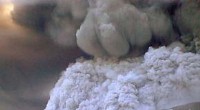
* Volcanic arcs: The buoyant magma rises through the overlying continental plate, eventually erupting to form a chain of volcanoes along the continental margin. These volcanoes are known as a volcanic arc.
3. Crustal Deformation and Mountain Building:
* Folding and faulting: The immense pressure exerted by the descending oceanic plate causes the continental plate to buckle, fold, and fault.
* Mountain ranges: The uplifting and deformation of the continental crust lead to the formation of mountain ranges, often with accompanying earthquakes.
4. Accretionary Prism Formation:
* Sediment scraping: As the oceanic plate descends, some of the sediments and oceanic crust on top of it are scraped off and piled up at the edge of the trench.
* Accretionary prism: This accumulation of scraped-off material forms a wedge-shaped mass known as an accretionary prism.
5. Other Phenomena:
* Earthquakes: The movement and interaction between the two plates generate earthquakes, which can be devastatingly powerful.
* Tsunamis: Large earthquakes in subduction zones can displace huge amounts of water, triggering destructive tsunamis.
In summary, deep-ocean trenches are sites of intense geological activity, where the collision of oceanic and continental plates leads to subduction, magma generation, volcanism, mountain building, and seismic activity.